The Judges Blew It AgainMilano Cortina 2026 Proved That Olympic Snowboarding’s Judging Crisis is Structural, Not Accidental
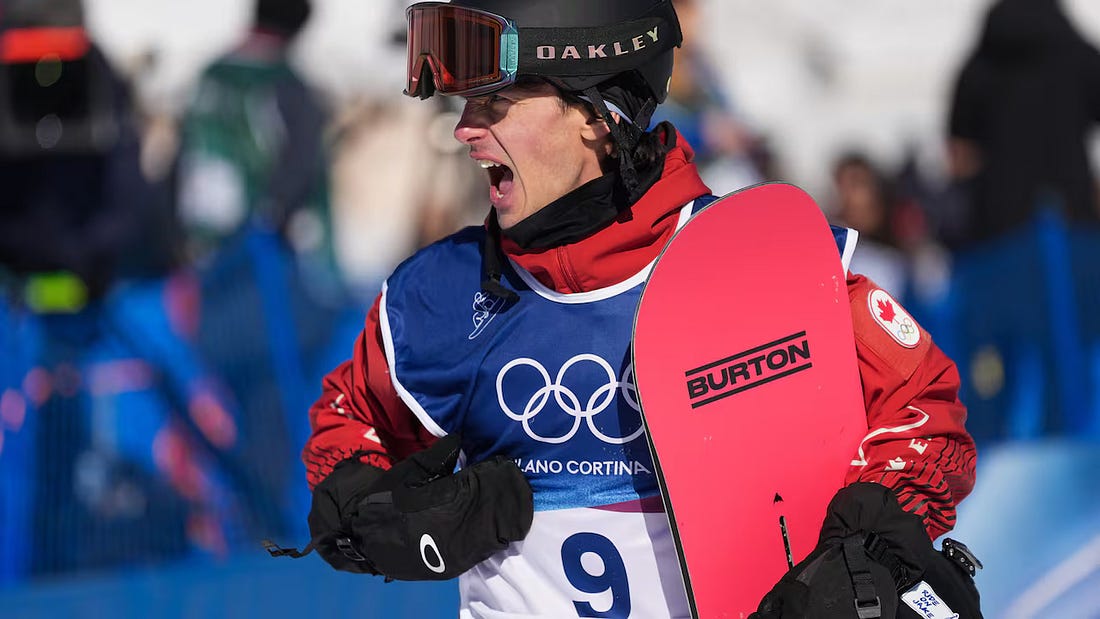
Back in January, I wrote The Olympic Illusion, arguing that the Olympics had never fully figured out what to do with snowboarding. That the sport’s biggest stage was still, after nearly three decades of Olympic competition, fundamentally broken. Two weeks into Milano Cortina 2026, I wish I had been wrong. I wasn’t. Across every judged snowboarding discipline at these Games, something went sideways. Not once, not in a single controversial call that could be dismissed as a fluke. Over and over, across halfpipe, slopestyle, big air, and snowboard cross, the judging either sparked outrage, defied logic, or raised questions the sport has been unable to answer since the day FIS took over the program in 1998. The thread connecting all of it isn’t bad luck. It’s a broken system that nobody in power has the will to actually fix. Let’s go event by event. Snowboard Cross: The Call That Broke the InternetIf you only followed one moment of Olympic snowboarding this cycle, it was probably Nathan Pare. The 21-year-old American from Maine was in his Olympic debut, and he ran one of the great quarterfinal comebacks in snowboard cross history. Dead last coming out of the start, Pare fought his way forward, got tangled briefly with Spain’s Lucas Eguibar on a turn, and then launched off the final jump to cross the line in first place. The kid thought he had won. NBC cameras caught his pure, unfiltered joy. And then the judges reviewed the footage and handed him a red card, ruling the contact with Eguibar “intentional.” “That’s insane,” Pare told a nearby judge, and you could hear every bit of it on the broadcast. It was insane. The NBC broadcast team said it didn’t look intentional. The contact was the back of Pare’s board clipping the front of Eguibar’s as he squeezed through a turn, moving from fourth to third, already ahead in the corner. The rule book in snowboard cross defines interference across three categories: intentional, involuntary, and incidental. Only intentional contact triggers a red card and disqualification. Involuntary and incidental result in a yellow card at most. The jury looked at the same footage the rest of the world saw and saw intentionality where almost no one else did. What made it worse was what happened next. Two French snowboarders, Jonas Chollet and Loan Bozzolo, advanced to the semifinals in Pare’s place. Eguibar, who had every right to be frustrated, defended the ruling. But even his defense made the sport’s problem clear. “The rule is really clear,” he said. And maybe it is, written down. The problem is that “intentional” is a judgment call, and judgment calls at the Olympics carry enormous stakes. One jury’s reading of “intentional” cost a 21-year-old his shot at an Olympic medal in his first Games. This is what happens when the adjudication of human intent is treated as a straightforward factual matter. Women’s Halfpipe: When the Hardest Trick LosesChloe Kim landed a double cork 1080. For those who don’t ride halfpipe, here’s the context: the double cork 1080 is the hardest trick in women’s halfpipe. Kim put it down on her first run and scored an 88. South Korea’s Gaon Choi, who did not attempt that trick, won gold with a 90.25. Japan’s Mitsuki Ono took bronze. Kim got silver. She was gracious about it. She congratulated Choi and said nothing publicly about the judging. Which is exactly what you’d expect from Kim, who understands the sport’s culture better than most. But the quiet debate that followed her run was anything but quiet online, and it pointed at something real. The halfpipe scoring system doesn’t reward individual tricks with point values. Judges assess the entire run as a package using criteria that include difficulty, amplitude, variety, execution, and progression, then assign a single number from 1 to 100 based on an “overall impression.” Those judges eliminated the high and low scores, averaged what remained, and arrived at 90.25 for Choi, who posted bigger amplitude on her best hits, around eight inches higher than Kim’s peak air. So who was right? That’s genuinely debatable, and that’s precisely the problem. When a scoring system produces outcomes where the athlete who lands the most technically demanding trick in her discipline loses to someone who didn’t attempt it, the sport cannot clearly defend its own results. Not because Choi didn’t deserve the gold, she may well have, but because the framework for explaining why has so much room for interpretation that it invites lasting skepticism. Amplitude vs. difficulty. Overall impression vs. trick hierarchy. The sport has been arguing about this for 30 years and has never landed on an answer that sticks. Kim never said a word about it. That kind of grace is part of snowboarding’s culture. But silence shouldn’t be confused with the problem not existing.
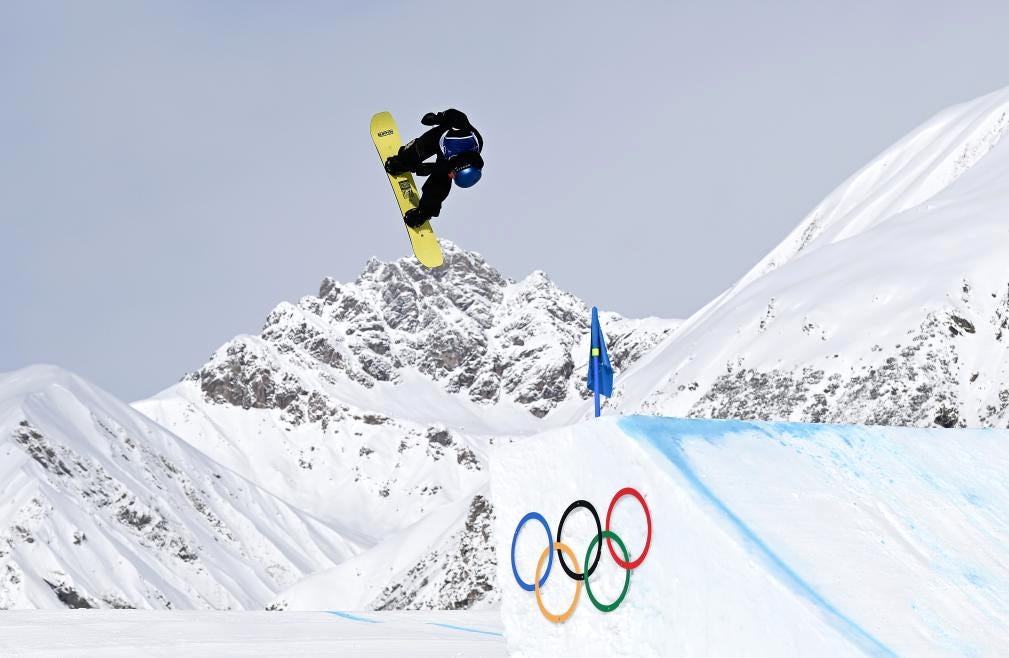
Men’s Snowboard Slopestyle: When Qualifying Means NothingIf the Pare DQ was the moment that broke the internet, the men’s snowboard slopestyle final on Wednesday was the moment that broke the sport’s own internal logic. Here’s what happened in Livigno: New Zealand’s Dane Menzies led qualifying with an 86.06. Norway’s Marcus Kleveland, two-time world champion, was second at 81.86. Canada’s Mark McMorris, the most decorated slopestyle rider in Olympic history with three consecutive bronzes, qualified third at 81.81. Those were your three favorites going into the final. None of them medaled. China’s Su Yiming, who qualified eighth with a 72.78, won gold with an 82.41 on his opening run. Japan’s Taiga Hasegawa, who also qualified outside the top five, took silver with 82.13. Jake Canter of the United States, the ninth qualifier, claimed bronze with a 79.36 on his final run. The 8th, 9th, and 10th place qualifiers finished 1st, 2nd, and 3rd in the final, in exactly that order. The top three qualifiers went 7th, 4th, and 8th respectively. That kind of qualifying-to-final inversion doesn’t happen in well-designed systems. It happens when the judging is so volatile that the numbers in one round have almost no predictive relationship to the numbers in the next. The score compression in the middle of the final standings told an equally troubling story. The riders who finished 5th through 10th, names including Red Gerard, Romain Allemand, Dane Menzies, McMorris, and 17-year-old Ollie Martin, were separated by less than two points. Gerard finished 6th with 76.60. McMorris finished 8th with 75.50. Cameron Spalding was 10th with 75.13. Over a point and a half separated six of the best slopestyle snowboarders alive. At that margin, a single judge’s read of how clean a tail grab looked can change the leaderboard by three positions. The cruelest moment went to Kleveland. A two-time world champion who had never managed an Olympic medal in three attempts, he put down what riders and commentators acknowledged was a serious final run, a Cab butter 1620 and double Todeo 1080 combo that looked like podium material. Then he waited. The scoring took what felt like an eternity. When it finally came back, he had 78.96. He missed bronze by 0.40 points. Marcus Kleveland, one of the most technically creative riders of his generation, left his third Olympics without a medal because of less than half a point in a scoring system that can’t explain its own decimals. McMorris was equally philosophical about it. Still recovering from a concussion, pelvic bone bruising, and strained abdominal muscles after a crash in Big Air training earlier in these Games, he put together clean runs and still couldn’t find the scoreboard. “I’m proud just to have made another final,” he said. There was no spin in it. Just a legend who understands better than most that the judging at the Olympics is not a reliable translator of what actually happens on the mountain. Su’s win, for what it’s worth, has an almost poetic dimension to it. At the 2022 Beijing Games, he was widely considered to have been robbed of slopestyle gold when judges missed a glaring error by gold medalist Max Parrot, failing to catch a missed grab that the head judge later admitted cost Su the top spot. Su went on to win Big Air gold that week and left Beijing with two medals, but the slopestyle injustice stuck. Four years later, he came back and won it cleanly. The judging finally got one right for him, at least. But the 2026 final as a whole was hard to defend. Winning scores hovering in the low 80s while the field collapsed around a punishing course with undersized jumps, scores ranging from 82 down to 75 across the bottom half of a twelve-man Olympic final, and the complete irrelevance of qualifying performance to final outcomes. The system didn’t malfunction in a single moment here. It just consistently failed to tell a coherent story about who rode best. The Systemic Issue That Nobody Wants to NameHere is the thing I want you to understand: none of what happened in Livigno this February is new. At Beijing 2022, judges admitted they had made a mistake in a slopestyle event after a television replay showed a rider failing to complete a grab that had already been credited in the score. The admission was remarkable in its honesty. It was also remarkable because it confirmed what riders, coaches, and anyone who has watched competitive snowboarding for more than a few seasons already knew: the judges are working with incomplete information in real time, making irreversible calls on tricks that happen in fractions of a second at 50 miles per hour. In halfpipe, slopestyle, and big air, the judging framework is built on something called “overall impression.” The acronym coaches use is DAVE-P: difficulty, amplitude, variety, execution, and progression. But here’s the honest truth about DAVE-P. Those five criteria aren’t weighted against each other with any transparency. There’s no formula. There’s no published rubric that tells you how much more a triple cork outweighs perfect amplitude, or whether variety trumps execution when a rider goes for broke. It’s gestalt scoring, which is another way of saying it’s a feeling, and feelings at the Olympics have consequences. The men’s slopestyle and big air events here were no different. Riders who spent years designing run strategies around what they thought judges wanted still walked away uncertain whether their reads were correct. The halfpipe men’s final produced its own debates about whether the panel was rewarding height or trick complexity. Big air, which reduces the equation to essentially two or three tricks and a final score, remains arguably the most nakedly subjective event on the snowboard schedule. None of this is the judges’ fault as individuals. Most of the judges working these events know snowboarding. The problem is structural. The framework they’re working within is built for a different era of the sport, when the trick ceiling was lower and the performance gaps between runs were larger. In 2026, when the top twelve halfpipe finalists are all capable of putting down elite runs, the margin for error in judging has essentially disappeared. And the system has not kept up. FIS and the Ownership ProblemI’ve written about this before, and it keeps being worth saying: FIS controls Olympic snowboarding, and FIS has never fully understood what it governs. The International Ski Federation took over the Olympic snowboard program in 1998, effectively pushing out the sport’s original governing body, the ISF. That takeover was never about improving snowboarding. It was about control, about who got to put their name on the sport when the television cameras showed up every four years. The result has been 28 years of a sport administered by an organization whose primary competency is alpine ski racing, attempting to apply judging frameworks borrowed from gymnastics and figure skating to a culture that grew out of skateparks and backcountry powder. The judging controversies at Milano Cortina 2026 are downstream of that. When Pare got DQ’d, when Kim’s double cork 1080 wasn’t enough to win, when every scored run produced a result that someone could reasonably question, those weren’t isolated errors. They were the predictable output of a system that was never built to handle what snowboarding has become. What Actually Needs to ChangeThe sport needs two things, and it has needed them for a long time. First, adjudication transparency. For judged events, the scoring breakdown should be public and immediate. Not just the final number, but how each judge weighted each criterion, what triggered score reductions, and what specific elements pushed a run above or below comparable scores. Gymnastics publishes this. Figure skating publishes this. There is no reason snowboarding should still be operating on numbers that appear from nowhere and require faith rather than explanation. Second, snowboard cross needs an explicit standard for what constitutes intentional versus involuntary versus incidental contact, with video examples published before every major competition. The category of “intentional” should require clear evidence of deliberate redirection toward another rider. A board clip in a turn is not that. Nathan Pare did not deserve to go home. The Part That Doesn’t ChangeI’ll say what I said in January, because it’s still true: snowboarding is better than this. The riding in Livigno was extraordinary. The progression in every event has been extraordinary. Watching riders push the limits of what’s physically possible on a snowboard, at the Olympics, in front of the largest audience the sport will ever reach, that part is real. That part is worth caring about. But the Olympic stage will keep failing snowboarding as long as the structure around the riding remains frozen in place. Judging reform isn’t a conversation for after the medal ceremonies. It’s the conversation that should have happened years ago, and keeps getting deferred until the next controversy forces it back into view. Milano Cortina 2026 forced it back into view. Again. The question is whether anyone in a position to actually change something will still be paying attention in four years.
You’re currently a free subscriber to that snowboarding blog. For the full experience, upgrade your subscription.
|
Rabu, 18 Februari 2026
The Judges Blew It Again










Langganan:
Posting Komentar (Atom)
Tidak ada komentar:
Posting Komentar