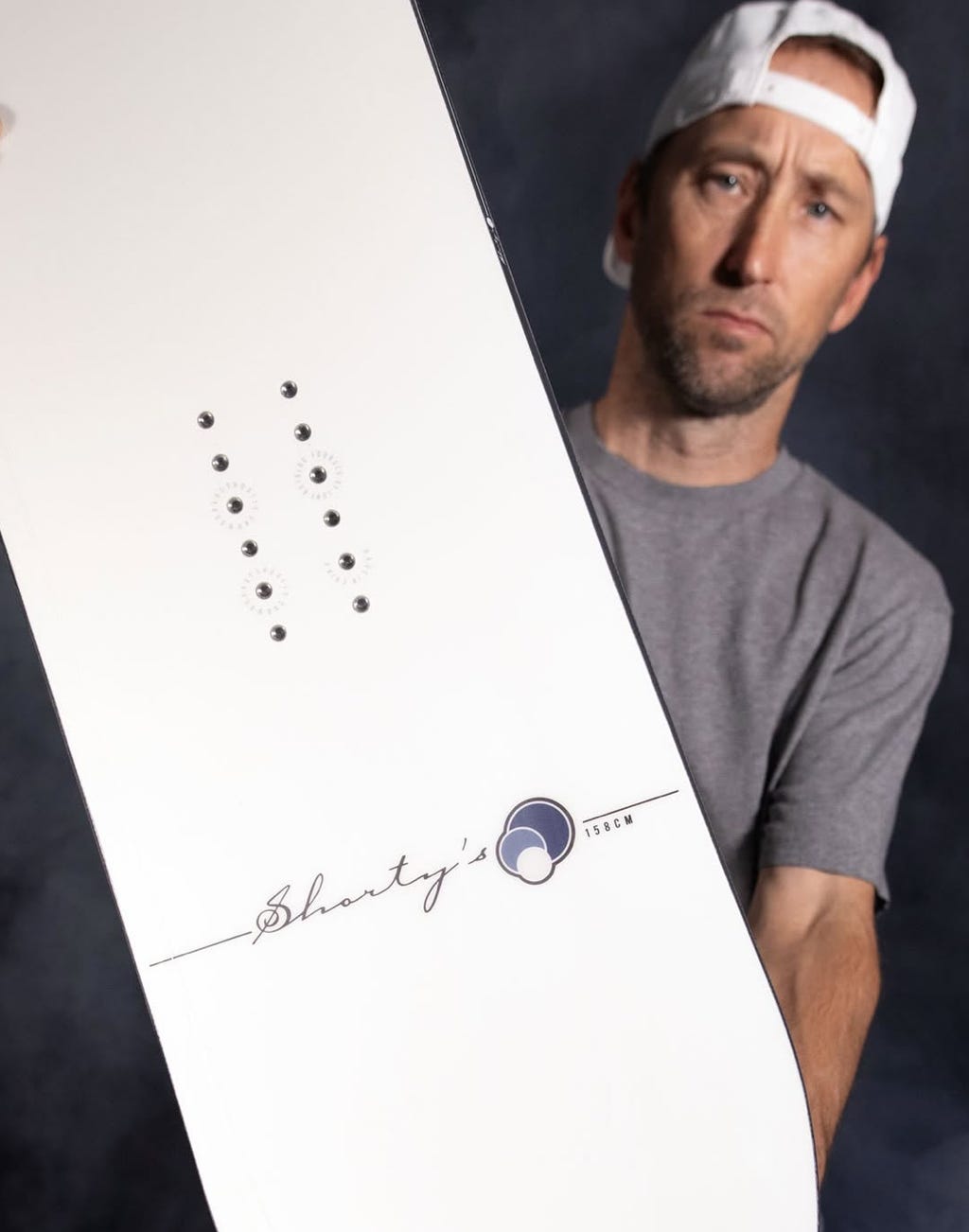
Ducking ropes and shredding slopes. Cutting lines and dropping rhymes. Quilted flannels and ball caps. Nasty road jumps, tow rope laps. Clipping tickets, secret stash. Tips and tails hacked to match. [Shaun] Palmer, [Shawn] Farmer, [John] Cardiel. Tell all skiers “go to hell.” Summit County neighborhoods, them gangsta’ boarders strapped real good. Dirty girls with winter weight, a six-pack of tall boys makes a date. Snowboard videos until dawn. Big pants, big stance, go get it on! Jamie Lynn’s smooth method airs, Jeff Brushie’s nappy dreadlock hair. Photographers and filmers with dumb nicknames: Whitey, Mouse ... a shaky frame. The ’90s were somethin’ f@king else — the best of the celebrated “worst”, everybody knew it in the moment and reveled in it. Snowboarders were a proud public nuisance. Influenced and inspired by (and involved in) snowboarding’s salad days , I’ve journalistically witnessed and written about the then emergent collective culture riding amok, tweaked-out style and pop world / punk rock / streetwise aesthetics; its misfits, miscreants, deviants, and delinquents, and their fantastic heroics. The brands were an extension, powered by smaller, rider-driven entities that spoke directly to the scene. Recognize that the sport’s imprint, ’80s, ’90s, and early ’00s, is forever indelible on the present and future (you’ve got to know where you came from to know where you’re going). To that direct effect, it’s to no surprise that there’s a retrospective wave compelling a revival of what once prevalent, since lost, long lamented … and now back by popular demand? Today, thanks to a potent mix of Gen Z vintage appreciation and older riders craving connection to their youth, iconic names—like Shorty’s, Joyride, Forum, and most recently, whispers of Atlantis—are being resurrected from the dead, rising from a sea of slush. This isn’t just about some throwback appeal … it’s about the emergence of a relevant cultural play and perhaps profitable retail category. A Golden Era: Culture Over CommerceWhat made brands from this era hit? They weren’t just companies slinging product; they were predominately independently owned, of tightly knit teams, building the movement — respectively, and collectively. Their advertising and marketing, riders, and video parts had a creativity, a perspective, a position, and slant that many of today’s corporate-backed purveyors seemingly and exceedingly lack. When you read or hear this phrase: “It was better when you hated us … “ (credited to Bluebird Wax) it’s often in a comment online to a post somewhere, and it’s in reference to a time before a general mainstream acceptance and corporatization. Many were rightfully a menace to snowciety … (Surely you’ve seen the candid Canadian TV news edit from ’85 of mountain management and ski patrol quite politely taking issue.) The return started quietly, driven by dedicated fans trading vintage pieces online and a new generation discovering iconic riders and video parts. But somewhat recently, it’s become official. And now onto our show: Shorty’s: Skate Deck DNA and Devun WalshOriginating in the skateboard industry, Shorty’s brought its raw, gritty, skate-aesthetic directly to snowboarding. They weren’t necessarily known for hyper-technical innovations, but for their commitment to simplicity, style, and team This vibe was perfectly embodied by influential Canadian riders Devun Walsh, Kevin Young, Chris Brown, and Dionne Delesalle, whose smooth, stylish riding and urban approach aligned the brand’s connection to its skate heritage. Shorty’s logo, apparel, videos, and resonated with riders who saw snowboarding as simply skating on snow. The brand maintains a cult following long after its demise. While not a massive hard goods relaunch, initial; response to the announcement of a rebirth posted to social was solid. Joyride Snowboards: Don’t call it a “comeback “. Seriously.We’ve sort of seen this more than once before over the years. No matter. All good. This brand holds real merit, once represented by the XLG Crew, those of a Midwest Invasion, that are credited with bringing skate to snow, back in Breckenridge, of: Dale Rehberg, Nate Cole, Roan Rogers, and Jake Blattner. True to its roots, the brand is targeting the culture-first market with limited edition collaborations like a model with Pro Skater Danny Way and another with punk band Pennywise. While these partnerships generate instant core credibility, the crucial business hurdle remains: with an Instagram follower count of just over 5k, the question is whether such niche hype can translate into the broad consumer awareness and consistent sales volume required for sustainable growth, especially for a brand that needs to appeal to the mass market. The limited digital reach may well be the biggest threat to its longevity. Forum: The Untouchable StandardIn 2020, the brand officially announced its return, spearheaded by original founder-rider Peter Line. The goal was clear: return to the roots of freestyle, focusing on simple, reliable boards with the classic Forum aesthetic. The initial relaunch was met with huge enthusiasm, proving that the cultural connection was still strong. As the definitive freestyle team, Forum’s appeal was its untouchable roster, that included Peter, JP Walker, Jeremy Jones, Bjorn Leines, Devn Walsh, Chris Dufficy, Joni Malmi, and Nate Bozung. Their early videos, like The Resistance (2000) followed a season later by True Life, set an untouchable standard for street and backcountry freestyle, proving that the board itself was only as good as the rider’s vision. Forum represented top-tier performance mixed with street-level cred. When Forum dissolved after being acquired and moved under the Burton umbrella, it left a massive hole in the industry. Atlantis: Ingemar’s Titan Air and Scanners Assault
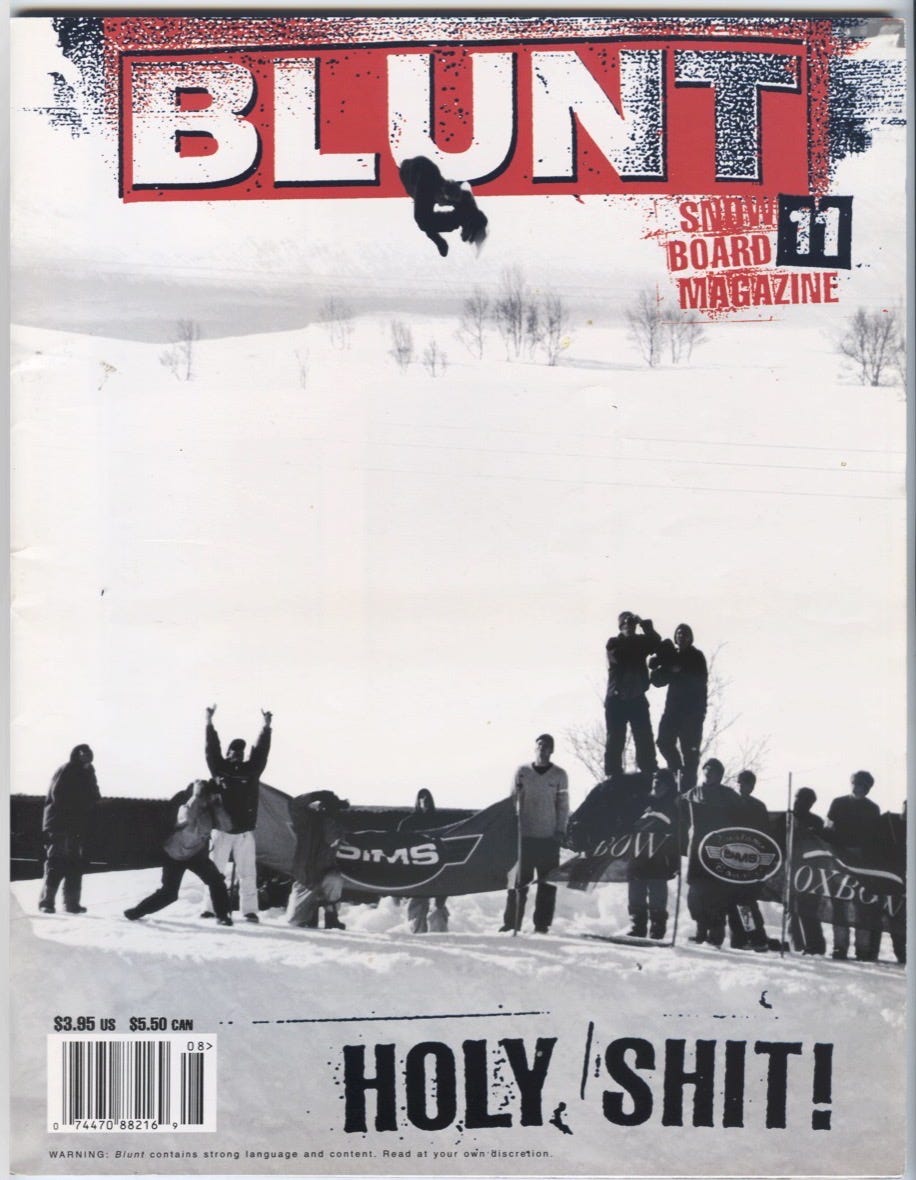
Atlantis Snowboards hung its legacy upon stylistically dynamic Scandinavian riders (aka Scanners) like Norway’s Daniel Franck and Sweden’s Ingemar Backman — the man who’d absolutely blow minds in a single moment. Backman’s record-setting, gravity-defying method air — the shot seen and heard around the world — at the Riksgransen quarterpipe contest, high-marked the next level. However, since this event is meaningless to most any of generation beyond the old new-schoolers. Curiously, the aftermath of Atlantis was Allian, which still maintains a website with Ingo listed as an athlete. Whether the brand will resurface, Daniel to join (he’s been riding and representing Academy … who carries a very similar logo), is unknown, un-researched. The Consolidation: Why They Faded AwayThe late 2000s and early 2010s saw a massive economic shift in the snowboard industry. The market consolidated, making it difficult for smaller brands to compete with the purchasing power and distribution networks of conglomerates like Burton and Amer Sports. Forum’s eventual sale and retirement by its owners felt like a death knell for an entire era of rider-driven independence. Many of these brands simply couldn’t weather the shift in the global economy and the shrinking margins of the hard goods business and the glut of product available at deeply discounted pricing. Read more: What Is Core Snowboarding Skateboard Reissues: A Blueprint for NostalgiaThe concept of a “successful reissue” is heavily benchmarked against the skateboard world, where brands like Powell-Peralta and Santa Cruz have built sustainable businesses on re-releasing classic graphics and shapes. However, the business dynamics are fundamentally different. A skateboard deck is a relatively low-cost, high-turnover item that serves as collectible wall art as much as equipment. The barrier to entry for the consumer is low, and manufacturing is straightforward. A snowboard, conversely, is expensive, complex hard goods that requires multi-layer construction, a higher production cost, and must perform safely in harsh conditions. While the initial run of a revived snowboard brand will sell out based purely on nostalgia, the long-term sustainability requires two things: 1) incorporating modern technology (flex profiles, base materials) to justify the high price point, and 2) establishing a new, relevant team roster to prove the gear’s performance to the next generation of riders. Pure nostalgia alone isn’t enough to keep the doors open. Morrow and the Power of a Pro ModelThe possible signaled return of Morrow Snowboards is a fascinating case study. Morrow was a massive player in the mass market, often found in large retail chains, serving as the first snowboard for thousands of aspiring riders. Could it be reclaimed from the bargin box store bins? Its true core credibility, however, came from its legendary team rider: Todd Richards. TR was a defining force of the era, known for his unique, smooth style and charismatic persona, his presence in seminal videos. The recent unveiling of a retro pro model acts as a potent, focused marketing tool, suggesting that Morrow is attempting to leverage its core heritage. It’s an example of an original brand using an original rider to validate its modern re-entry into the highly competitive core market. While it may have attempted to test the snow a winter or two ago, anything more from this company isn’t apparent. The Kemper Cautionary TaleWhile the Shorty’s and Forum relaunches have been celebrated, the journey back isn’t always smooth. Kemper Snowboards, an original ’80s brand famous for its bright colors and early adoption of twin tips, also saw a re-release attempt in recent years. Despite strong brand heritage, the new iteration ultimately had to be mothballed after struggling with the massive hurdles of modern distribution, manufacturing costs, and achieving mainstream retail penetration. Kemper’s story serves as a necessary reality check: nostalgia provides the initial excitement, but sustainable business fundamentals are what keep the lights on. I’d even pose whether pulling from the ’80s era in the first place was a promising and relevant play, when awareness around snowboarding was considerably less than a decade later. The Apparel Echo: 45RPM VintageThe revival isn’t just about hard goods; it’s about the era’s aesthetic, a connection Joel Gomez—founder of the iconic ’90s outerwear brand Sessions Outerwear—understood perfectly. Gomez’s latest venture, 45RPM Vintage, is a crucial part of this perceived opportunity. While not equipment, 45RPM focuses on leveraging the era’s archived photography, iconic magazine covers, and classic brand logos from the ’80s and ’90s, printing them onto tees and hoodies. However, the presence of deep, across-the-board discounting on many listings suggests a complex reality: while the desire for this specific cultural IP is undeniable, converting that interest into sales at the apparel level remains a persistent challenge, proving that nostalgia is appreciated to a point, but often not at a premium. Read more: 45RPM Vintage: Style Idols Deep Which Forgotten Icon is Next? And Who We’d Like to See Return …The revival has proven that there’s a genuine interest, speculatively profitable demand for the aesthetics and ethos of the ’90s. With active relaunches proving audience responsive, industry inevitably turns to which defunct brands are the next likely prospects. One strong candidate for a future rebirth is The Movement. Once fronted by heavy-hitting rider Matt Donahue, The Movement established a reputation, moreover a mystique that hasn’t been replicated since. How about: Special Blend / Four Square Outerwear, Grenade, Iris Eyewear, Option Snowboards, Original Sin Snowboards, Division 23 Snowboards, Subtle Snowboards, Blunt Snowboard Magazine, Grease Monkey Corp. Gloves, PNW core shops: Exit Real World (Portland) and Snowboard Connection (Seattle). This all isn’t just a marketing gimmick. It represents a swing back toward the culture, the videos, and the sense of community that the industry sometimes loses sight of in the pursuit of “innovation”. It’s a reminder that sometimes, the best stuff isn’t freshly fabricated but instead harkens to a period of substance and meaning. In an overly and overtly saturated market, it comes down to brand differentiation. Heritage is a selling point to the loyalists that supported it back in the day and may likely today.
|
Kamis, 11 Desember 2025
Waxing & Milking Nostalgia










Langganan:
Posting Komentar (Atom)
Tidak ada komentar:
Posting Komentar